
落日余晖
“민간인 살해 뒤 ‘하마스’ 포장 만연”…이스라엘 병사 양심선언_我的网站

A |
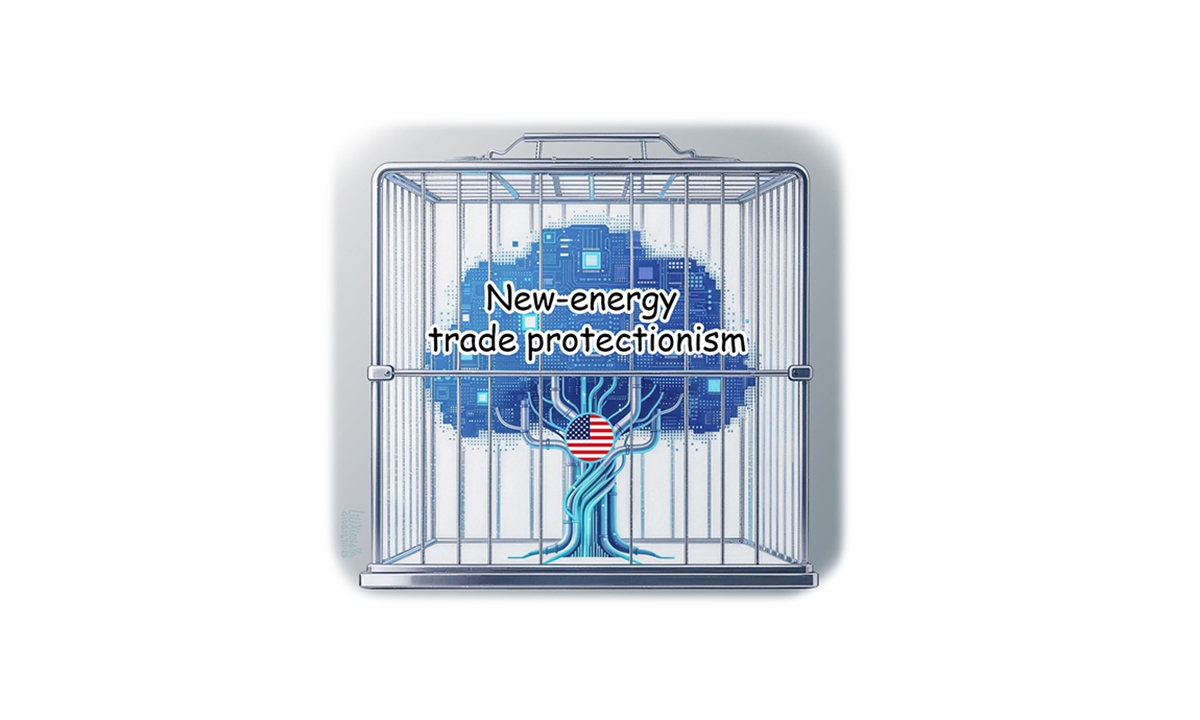
Recent media reports have questioned whether a natural gas plant built to power an Amazon data center project in Texas could become the largest climate polluter in the US. The controversy, whatever the eventual outcome, offers a reality check for America's artificial intelligence (AI) drive.
It exposes a growing contradiction: The US is racing to expand its AI capabilities, yet its protectionist trade policies are making it harder and more costly to access some of the clean-energy technologies needed to sustain that expansion. This raises a broader question: Can an energy-intensive AI race afford the costs of renewable energy protectionism?
The US is entering a new era of rising electricity demand. Data centers, the backbone of the AI economy, are emerging as one of the fastest-growing sources of power consumption. Much of that demand is still being met by fossil fuels: The International Energy Agency reports that natural gas supplies more than 40 percent of the electricity used by data centers in the US, making it their largest source of power.
So, it's not surprising that the expansion of data centers has raised concerns over their environmental impact and the pressure they could place on local power systems and electricity bills. A Gallup survey conducted in March found that seven in 10 Americans opposed the construction of AI data centers in their local area, including 48 percent who strongly opposed such projects.
The findings point to a broader challenge for the US: The race to develop AI is increasingly becoming a race to meet growing energy needs. Addressing this challenge will require more than advances in computing technology; it will also depend on an energy system capable of delivering large amounts of reliable, affordable and cleaner power. That, in turn, will require faster development and broader deployment of clean-energy technologies, from solar power to energy storage.
Yet in the clean-energy sector, the US has increasingly relied on protectionist trade measures that limit access to cost-competitive products from global markets. The country has placed greater emphasis on expanding domestic manufacturing capacity, but rebuilding entire clean-energy supply chains at home is a costly and time-consuming process. Even if expanded domestic production is achieved, it is likely to come at a higher cost, making the deployment of renewable technologies more expensive and potentially slower.
The solar industry offers a clear illustration of this policy direction. The US has continued to expand trade barriers in the sector. Reuters reported that the US government announced on Thursday a series of price floors and a 15 percent tariff on products made from polysilicon, a raw material used in solar panels.
The challenge lies in the limited scale of the US polysilicon industry. Reuters reported that the country has two polysilicon factories. Against this backdrop, relying on domestic polysilicon production while restricting access to imports runs counter to the goal of expanding solar power in the US. The country risks creating barriers that ultimately constrain its own access to the global supply chains needed for growth.
The pressing issue for the US is the speed at which new power demand is emerging. The expansion of data centers is creating electricity needs that cannot wait for domestic clean-energy capacity to develop gradually. Global supply chains can provide the scale and speed required in the near term. By narrowing access to these sources, the US risks turning clean-energy policy into a drag on the infrastructure needed for its AI race.
The US has placed AI high on its economic and technological agenda. The outcome of this race will matter greatly, as financial markets are also watching whether America can turn its AI efforts into commercial success.
This leaves the US with a difficult choice: Can it afford the cost of clean-energy protectionism while racing to build AI infrastructure? The answer may be no. Trade barriers that limit access to competitive renewable technologies could ultimately become a constraint on the AI expansion that Washington is seeking to accelerate.
The author is a reporter with the Global Times. [email protected]
。 지난해 8월25일 가자지구 남부 칸유니스에서 로이터통신 소속 호삼 알마스리 기자의 장례식이 진행되고 있다. 그는 나세르 병원이 공습을 받으며 숨졌다. 칸유니스/AP 연합뉴스 이스라엘군 병사가 이스라엘이 팔레스타인 민간인을 살상한 뒤 희생자를 ‘하마스 테러리스트’로 둔갑시켰다고 폭로했다. 지난해 8월 22명의 목숨을 앗아간 이스라엘군의 가자지구 병원 폭격 이후 1년 만에 나온 양심 고백이다. 익명을 요청한 이 군인은 25일(현지시각) 에이피(AP) 통신·르몽드 등 언론과 이스라엘 비영리단체(NGO) ‘브레이킹 더사일런스’에 이스라엘군의 민간인 살상 “사후 재구성” 관행을 알렸다. 그는 “(민간인이 숨진) 공격이 발생하면 이스라엘군 대변인은 희생자를 하마스와 연결지으려 한다. 사망자들이 ‘하마스 테러리스트’였다고 말하면 전 세계에 우리가 더 나아 보이기 때문”이라고 말했다. 이어 “하마스와의 아주 미약한 연관성만 있어도 (군은) 그를 하마스 테러리스트라고 말할 수 있다”며 “(군 내부에서는) 이런 과정을 ‘사후 범죄화’라고 부른다”고 덧붙였다. 사후 범죄화 작업은 민간인 희생자가 하마스와 아무 관계가 없더라도 이뤄진다. 지난해 8월25일 이스라엘군이 가자지구 남부 칸유니스의 나세르 병원을 고폭탄으로 폭격했을 때가 대표적이다. 이 공격으로 로이터 통신의 사진기자 후삼 알마스리와 에이피 통신 사진기자 마리암 다가 등 22명이 숨지고 50명이 다쳤다. 이스라엘군은 사망자 중 6명은 “하마스 테러리스트”였다며 “적이 광범위하고 은밀하게 영상정보를 수집하고 나세르 병원 같은 민감한 장소를 악용해 이스라엘군에 대한 테러 활동을 벌이고 있다”고 주장했다. 병원 옥상에 하마스의 카메라가 있어 폭격했다는 것이다. 그러나 이날 폭로에 나선 병사는 이스라엘군이 이 카메라가 하마스와 연계됐다는 증거를 찾지 못했다고 증언했다. 카메라는 알마스리 기자의 것이었다. 이스라엘군이 하마스 조직원이라고 내세운 6명 중 공습 목표였던 사람도 없었다. 병사는 “카메라를 들고 있던 기자를 테러리스트로 포장할 수 없었고, 그를 테러조직과 연결지을 수도 없었다”고 밝혔다. 이어 “나는 이 공격 이후 침묵을 깨기로 결정했다. 이스라엘군이 기자들을 겨냥하고 있다는 것을 깨달았기 때문”이라며 “군은 이를 전술적 위협, 군사적 표적이라고 불렀지만 결국 그들은 기자들이었다”고 고백했다. 브레이킹 더사일런스의 나다브 바이만 대표는 “이스라엘군의 무모한 교전규칙에 사후 범죄화 관행이 결합해 모든 총탄·포탄·미사일에 자동적으로 정당성을 부여하고 있다. 이는 조사를 회피할 수단이 된다”고 지적했다. 실제로 이스라엘군은 지금껏 폭격 책임자를 문책하지 않고 있다. 이스라엘군 대변인은 르몽드에 여전히 내부 조사가 진행 중이라며 “조사에 포함되는 사건의 세부 내용에 대해서는 어떤 논평도 하지 않는다”고 했다. 에이피와 로이터는 이날 공동성명을 내어 “1년이 지난 지금도 우리는 알마스리·다가의 죽음에 깊은 충격을 받고 있으며, 무슨 일이 있었는지 이스라엘 당국에 여전히 답을 요구하고 있다”고 밝혔다. 가자 보건부에 따르면 2023년 10월 가자 전쟁 발발 이후 7만3000명 이상의 팔레스타인인이 이스라엘 공격에 숨졌다. 이 중 207명은 기자였다.。
Current article:http://pvi02w2.cheshenzhuaduanza.buzz/u4ptw/jzqig.html
Published on:00:00:00
 0-2,首败!中国男足爆冷失败,无缘季军仍创最佳,排名比日本高
 《剑星》迅驰潜水服MOD
 Muslim Groups Criticize Beheading of Hindu Man, Won't Allow 'Talibanization' of Indian Society
 英特尔新一代的骄傲曝光:内存、固态硬盘集成
 真金白银投得更实 政策举措落得更准,真金白银投得更实 政策举措落得更准
 1年390万美元!德罗赞将加盟掘金 约基奇穆雷戈登一起招募他